
Casa Rocca Piccola
Valletta, Malta

After the political grandeur of the Grandmaster’s palace last week, I thought it might be good to show what an actual home from the period looks. Casa Rocca Piccola in Valletta was built in the period of the Knights as Valletta was taking shape. It was first owned by an Admiral of the Order, Don Pietro La Rocca and remains named after him to this day. It has though, passed through a few hands since then and in the 18th century it passed to a noble Maltese family, the Barons of Budach, and remains occupied by his descendants.
I’ve been here a couple of times and I just love that peek into a Maltese house of nobility. The Maltese nobility was not much mentioned when I growing up here as a child. It was the 70s and a period of coming out of the British yoke and, in fact, coming out of all yokes, this was the first time Malta has stood up as an independent country and the government of the day had to find their way. My consumption of Maltese culture from then, as a visitor to Malta in any case, since my parents had decided to emigrate to London, was around sun, sand and sea, as Malta marketed itself as a tourist destination for play. It's only recently that I’ve started to discover the deeper histories of Malta as various heritage sites have been opened up. Within that, sites of Maltese nobility are not numerous, which makes this site all the more important.
Ok, so that said, let’s take a look, I followed a guided tour, which was very good and then was able to rattle around taking pictures. This is really a very personal house, I may have mentioned before but I do love a small house museum, I just think you get a much better sense of the lives lived there. This house is clearly lived in and the collections have obviously been amassed over years and generations.
They’re really interesting from different perspectives, with the museum nerd eye, you can see that the family collected in concert with the collecting habits of nobility in Europe. So, the Chinese Room houses some lovely cabinets of different collections of small pieces, our guide pointed out the silver vinaigrettes which belonged to Nicolina Apap, wife of the 7th Baron of Budach. These, as was common in Europe, were filled with pleasant scents and used to distract from the smells of pre-sewer system Valletta! On the balcony that looks over the central courtyard, you find gorgeous Chinese wooden carvings, there’s an intricate, wooden, model boat and a cabinet full of antique fans. Beautiful gilded mirrors are, of course, everywhere.


In the Sala Grande, a gorgeous Bohemian chandelier hangs from the ceiling illuminating a salon filled with beautiful art and furniture, I was taken by what looks like a Renaissance bust of a woman, I wonder what the story is there? The Archive, Library and Cabinet are filled with rare books and collections of objects d’art. There are some exquisite chess sets, they are really finely worked, I could have spent ages just looking at these, I suspect they’re not used!


All of these treasures have been collected, probably, over generations and as I’ve mentioned, they reflect on the collecting habits of European nobility, but, what makes the house really special for me, is the recognisably Maltese character to it and the pride taken in those objects.
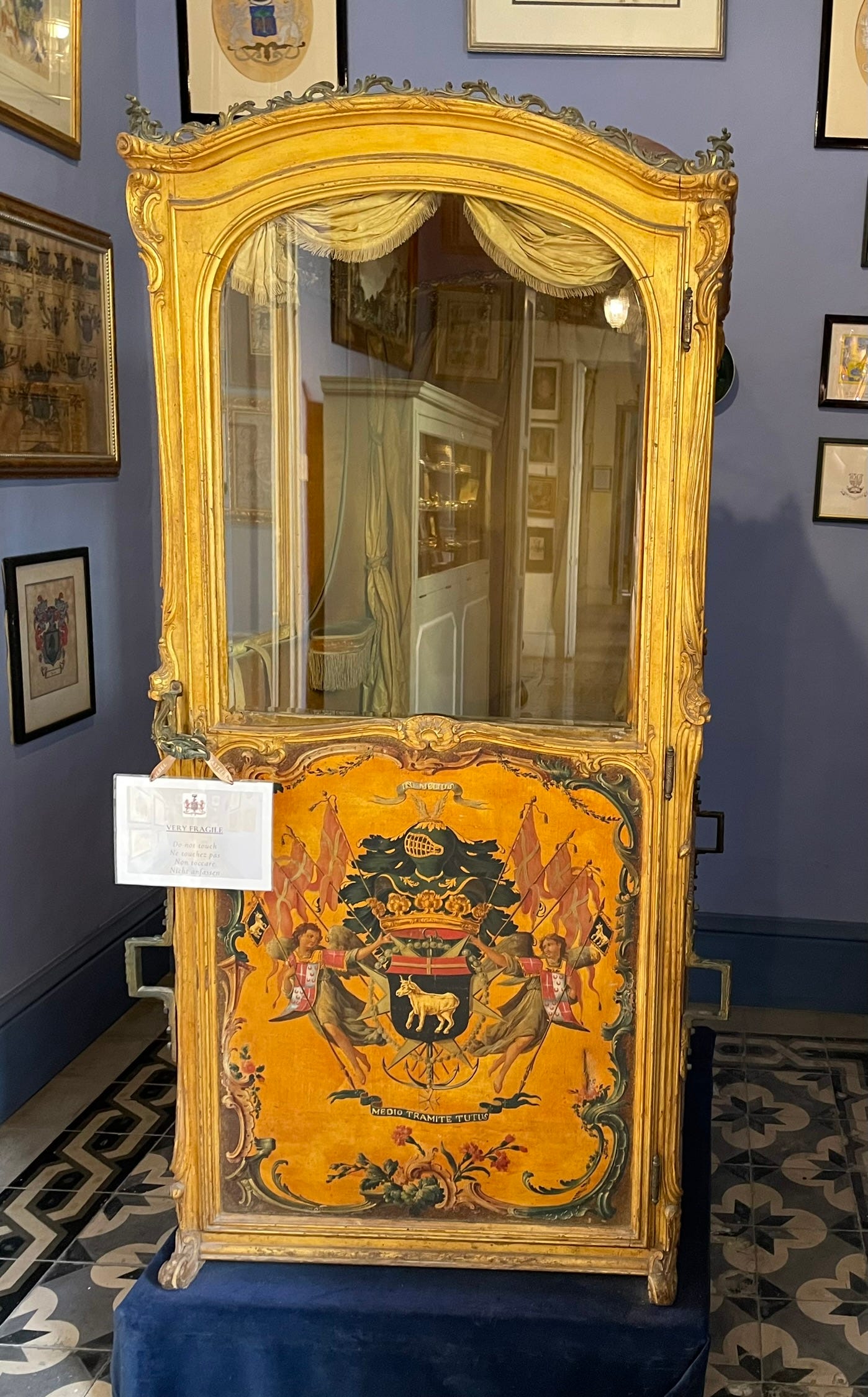
At the end of the Cabinet you find a Sedan Chair full of history, it belonged to Nicholas de Vachon Belmont, one of the last Knights of Malta, he refused to leave Malta when Napoleon invaded in 1798 and stayed until his death in 1807. He was buried in St John’s Cathedral with full honours.
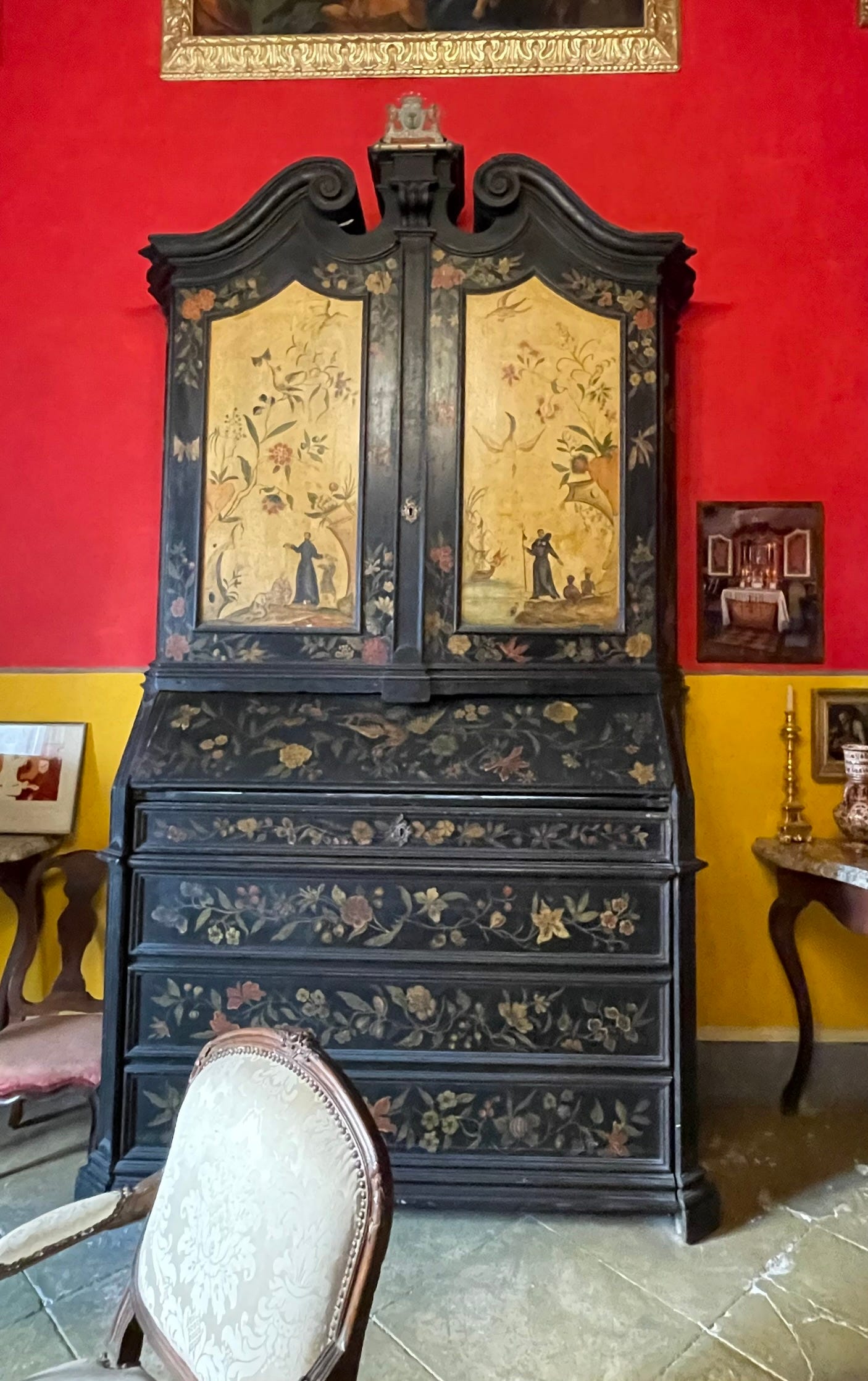
While in the Sala Grande, there’s a stunning Chinoiserie bureau, this opens out to reveal a portable altar, not very many of these are left in Malta and it reflects on the recognisably strong religious character within the family. Altars such as these could be taken on travel or to country houses so that the family would always be able to worship. We didn’t see it open but I’d guessed it was an altar because of the religious iconography on the outside, it turns out to be St Francis Xavier surrounded by exotic birds and fauna. We’ve studied him recently as part of the religious reformation of the Catholic Church, he was a Jesuit, the order believed in spreading the Christian faith through missionary work, hence the exotic imagery as he spend the last years of his life in Goa, India.
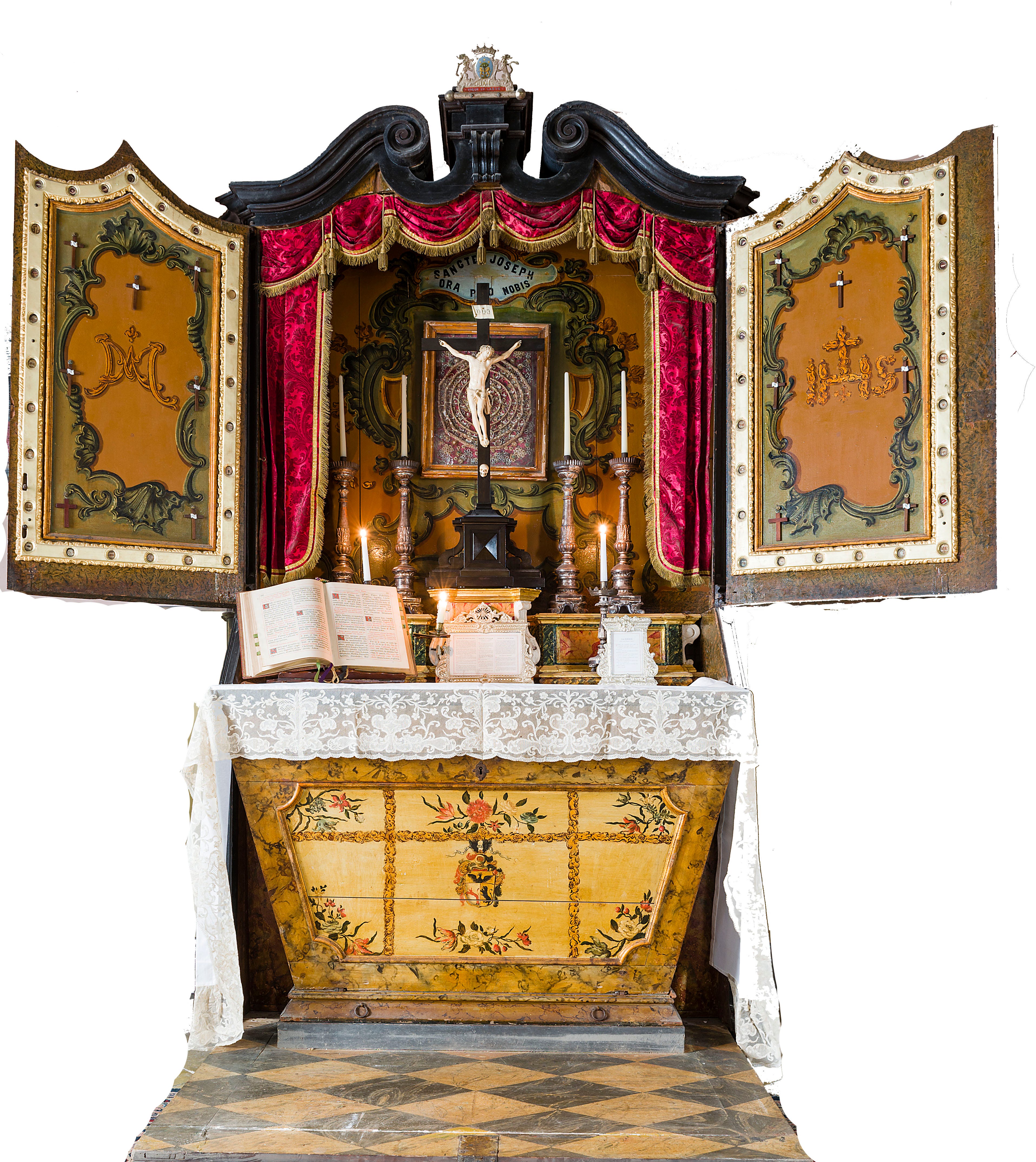
Altars such as these could be taken on travel or to country houses so that the family would always be able to worship.
To add to that sense of religion being a big part of Maltese culture, next to the Sale Grande is the family chapel, which is still in use today, this seems to be quite common with Catholic noble families. An artefact caught my eye, an ornate cross under glass, I asked the guide if it was a relic and it was, a piece of the holy cross. I do find relics fascinating, obviously some of the arguments about the reformation were centred on the worship of false idols, of which relics formed a part, but, for me, there are more about connection, a chance to imagine being part of the fabric of the very making of Christianity. There’s clearly a strong connection to the church, the cabinet in here is full of religious artefacts including some Papal slippers, quite a significant gift!


There are Maltese items all over the house, not one, but three, beautiful Maltese clocks, handmade and gilded, they’re still made in the traditional way to this day. Lots of Maltese silver filigree items, and an infant Jesus under glass surrounded by filigree flowers. There are more personal insights to a Maltese life as well, the bedroom of Orsola de Piro, has been left much as it was, her four poster bed is in here, with probably original lace linens, as is the washstand, quite a posh one of course, no enamelled tin here! One of the striking paintings in this room is of St Rufina, it’s very dramatic and arresting, a woman is being tossed by waves in the sea and is strapped helplessly to a wooden plank. It seems to be about martyrdom and is quite affecting, it was painted by the grandfather of the current Marquis, Giuseppe Cali, quite a renowned Maltese artist.


Added to all this, is the layering of generations of lives lived here that clearly continue, the art on the walls isn’t static, there are old masters but there’s also Pre-Raphael Art, Modernist and Contemporary Art. I’m sure they could run an Art History tour alone! This gives the house the sense of being a home and sure enough, a crackling fire was there to greet us in the Porphyry room. I’ve never seen a live fireplace in a Maltese house, we just had a paraffin heater for the couple of weeks that needed a bit of heat. It was very nice and quite welcoming, I so wanted to sit down and enjoy a read in here! From here you could get a glimpse of the rather stunning Summer Dining Room, this room was added in the 1920s in Arts and Crafts style and you certainly get that sense of understated elegance. The table is laid with a gorgeous dinner service and cutlery but it doesn’t take away from the sense of lightness in this room which comes from the large windows. Gorgeous space, what a great place this would be to have a wedding!
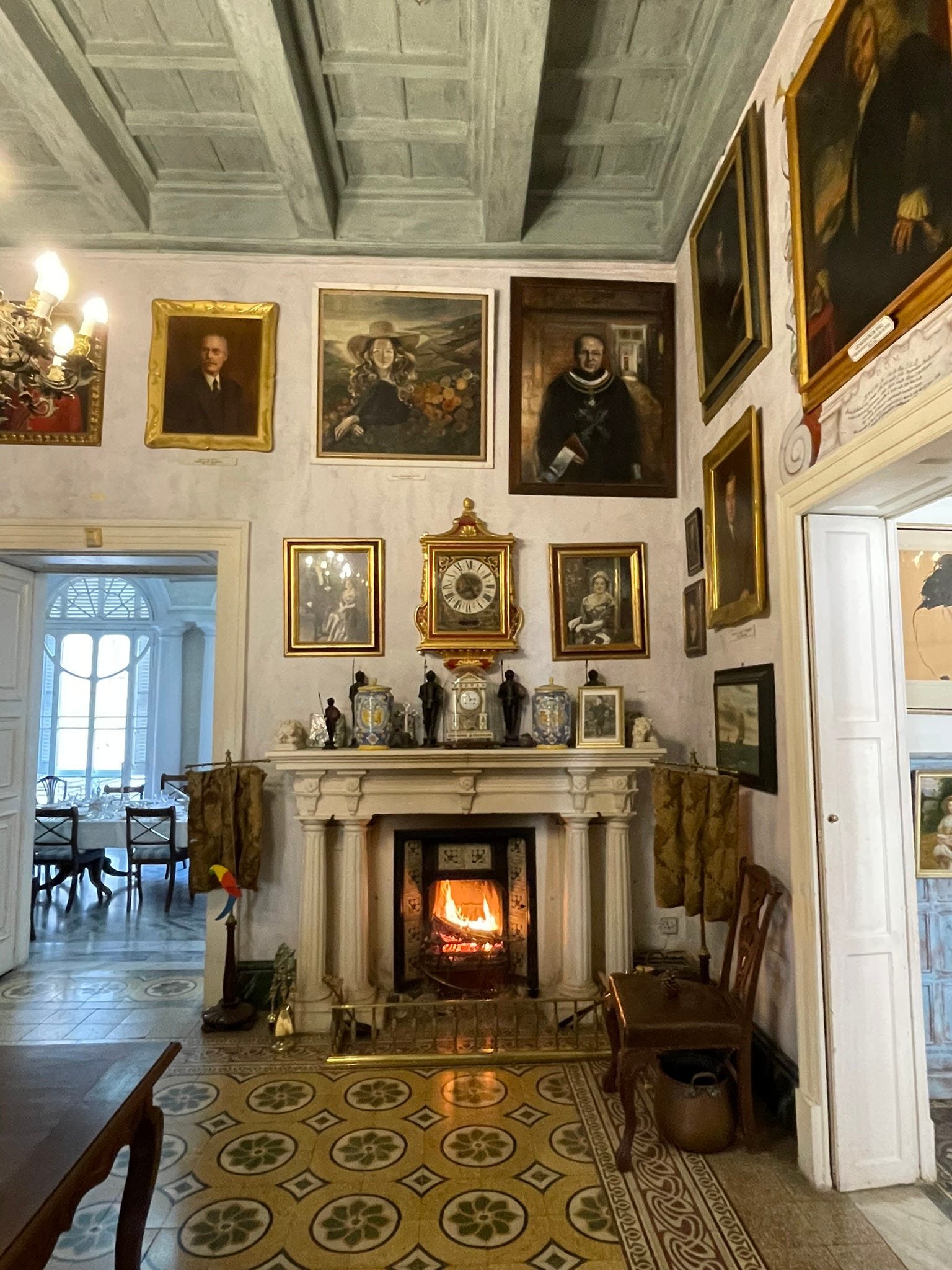
Gorgeous space, what a great place this would be to have a wedding!


Bringing me down from my flights of fancy, literally, the guide took us down into the basement and into two wells that had been converted into shelters during WW2. As, I’m sure I’ve banged on about, Malta was the most blitzed country in the world in WW2, it is only because of these kinds of shelters that the population was not as decimated as it might have been. Our guide explained the wells were reinforced with concrete pillars and ceilings to make them more bomb proof. The wells are also connected to other houses underground and lead into the network of tunnels built by, who else, the Knights, when they built the fortifications of Valletta.


When I walk around Valletta, a City built by gentlemen for gentlemen as the tag line goes, I’m forever craning my neck to look at all the old palazzos. So many are neglected with balconies looking like they may collapse at any time, and others have been split into so many parts it’s hard to try to re-piece them mentally, while still others have renovated into boutique hotels. Casa Rocca Piccola is unique, it’s still whole, it hasn’t been renovated over, it’s collections haven't been disseminated and it’s still breathing with life. We’re lucky that the owners are happy to open the house and share its treasures and history with us. If you want a glimpse of true Maltese history served up with a slice of pride, go along to see it and support our heritage.
Rita Fennell
Gallery Tart
How beautiful - and jam-packed full of treasures. Thank you for taking us along with you!